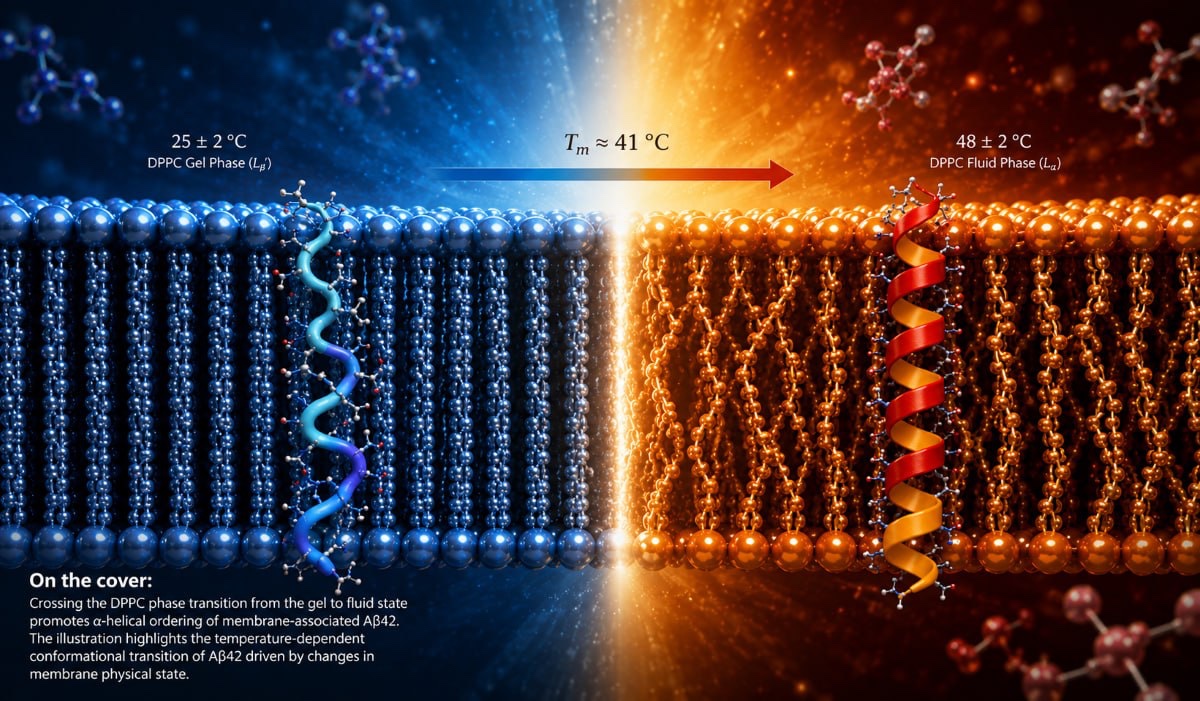
The study convincingly demonstrates that the transition of dipalmitoylphosphatidylcholine (DPPC) through the phase transition temperature toward a more fluid state promotes the stabilization of the α-helical conformation of Aβ42, whereas the β-structure dominates in the ordered gel phase. These results are fundamental for understanding how membrane physical parameters—in particular, temperature—modulate the conformational equilibrium of the amyloid peptide, bringing researchers closer to deciphering the early molecular events underlying neurodegenerative pathologies.