On 9 – 12 August, JINR hosted events within the framework of the Lise Meitner Programme of IAEA (LMP). The Programme is aimed at supporting and professional development of women in the nuclear industry, whose work experience is from three to ten years. The organizers in Russia were the Rosatom Technical Academy and the Joint Institute for Nuclear Research.
The International Atomic Energy Agency (IAEA) was founded in 1957, deals with the peaceful use of the atom and activities that help the non-proliferation of atomic weapons.
The Lisa Meitner Programme became an international initiative of the Agency and started in March, 2023 to commemorate International Women's Day.
The goal of the Programme was to bridge the gender gap in the nuclear field, to help women to realize their potential and to take more leadership positions. IAEA Director General Rafael Grossi highlighted that the world needs the contribution of women in meeting problems such as climate change, energy and food security.
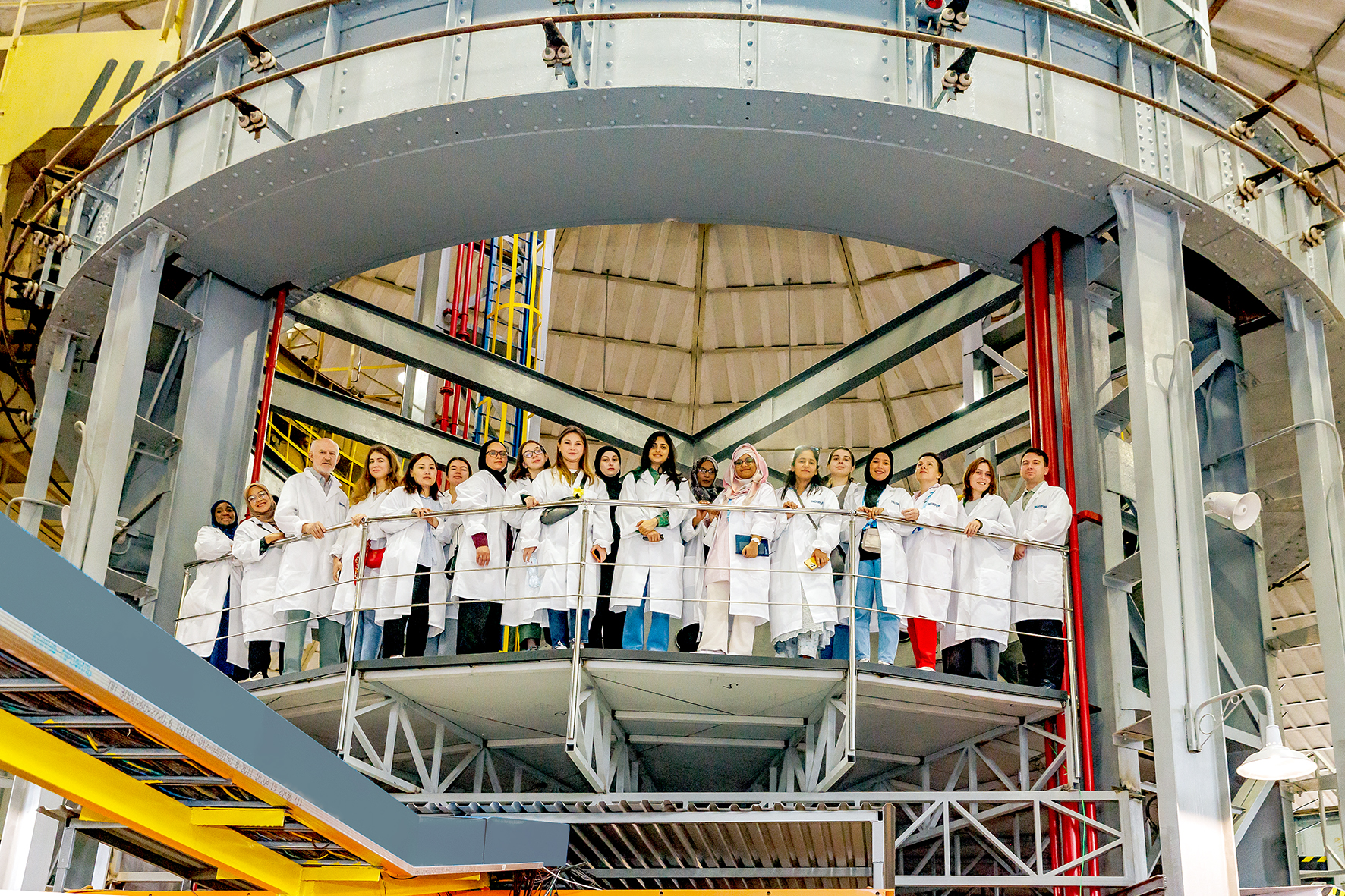
This year, on 3 – 14 August, the LMP was held for the first time in the Russian Federation. The participants were women from IAEA Member States: Algeria, Bangladesh, Belarus, Egypt, India, Indonesia, Jordan, Spain, Mongolia, UAE, Pakistan, Russia, Sudan and Turkey. The 14 participants visited nuclear infrastructure facilities in Moscow, Dubna, Obninsk, Udomlya and Elektrostal.
The group was accompanied by the IAEA representatives headed by the Lise Maitner Programme Manager Maria Naydenova and Technical Lead of the Department of Nuclear Energy of IAEA Katya Slavcheva.
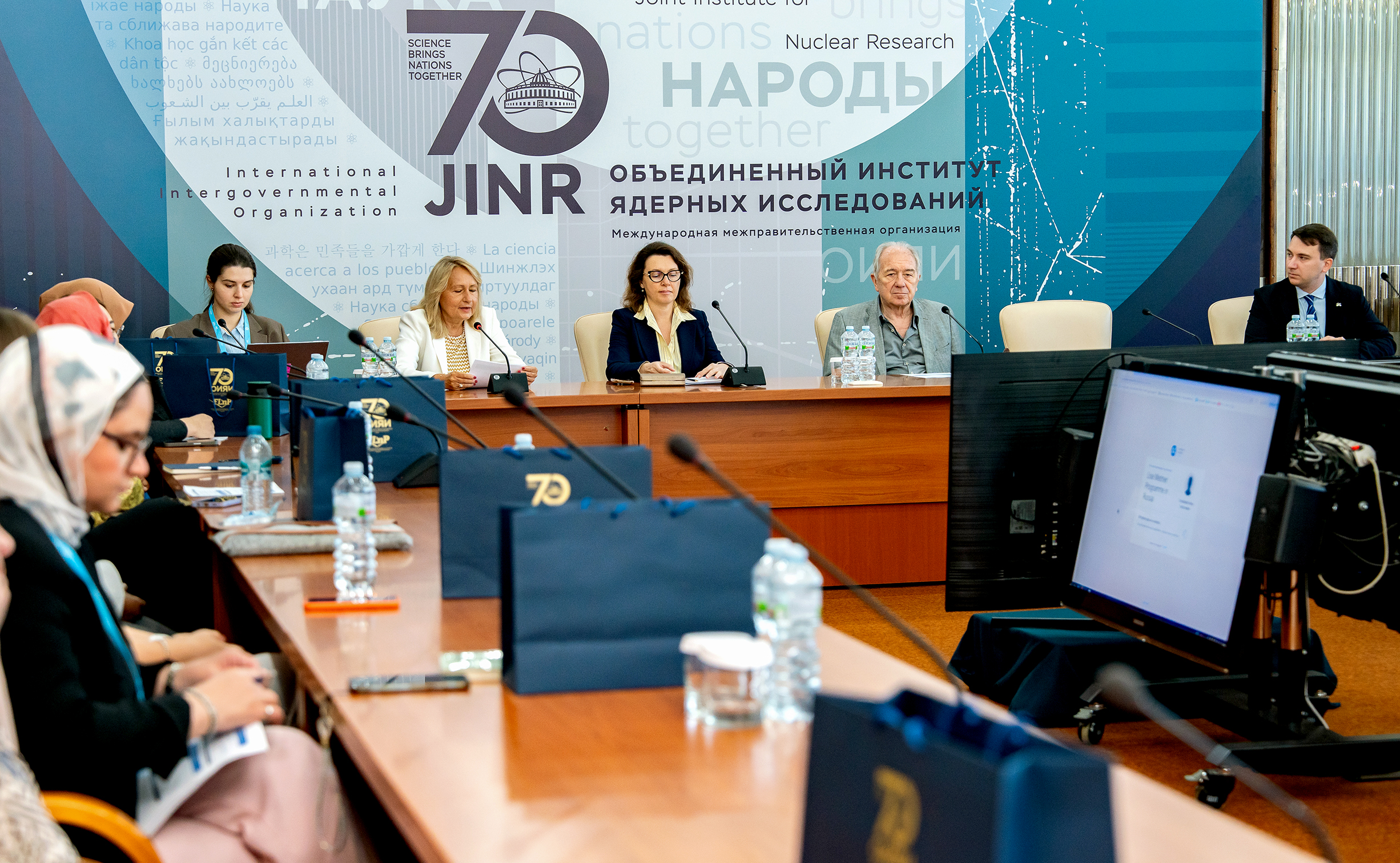
Maria Naydenova spoke about the details, "Named after the Austrian-Swedish physicist Lisa Meitner, this Programme for invited specialists is aimed at promoting the career development of women in the nuclear sector, in particular, in the field of nuclear energy. The LMP includes on-site lectures and discussions, interactive training and technical visits to various nuclear facilities. In addition, the participants have the opportunity to establish personal professional relationships with a wide range of leaders and experts in this field. The participants improve their interpersonal skills through management and leadership training, mentoring and establishing contacts.
Since 2023, there have been 7 streams of participants and the 8th Programme was held in the Russian Federation." The delegation spent several days in Dubna. JINR prepared a rich programme of reports and excursions to the facilities, as well as a traditional boat trip.
On the part of JINR, JINR Vice-Director Latchesar Kostov welcomed the Programme participants. Several speakers delivered reports on the first day. The report of Head of Division of FLNP Alexander Belushkin was dedicated to the topic of advanced neutron sources for condensed matter research. The chief researcher at VBLHEP Mikhail Sapozhnikov spoke about the use of portable neutron generators. He also introduced the participants to his book on Dubna physics and his mentor: "The life and ideas of Bruno Pontecorvo". He handed the English version of the book to one of the participants. Head of Sector of FLNP Inga Zinicovscaia presented the topic of Neutron Activation Analysis in environmental research, first, a lecture was given and afterward, an excursion to the Laboratory was conducted. Radiation protection and environmental monitoring of research reactors became the topic of the report of Head of the Radiation Safety Department Stepan Shirkov.
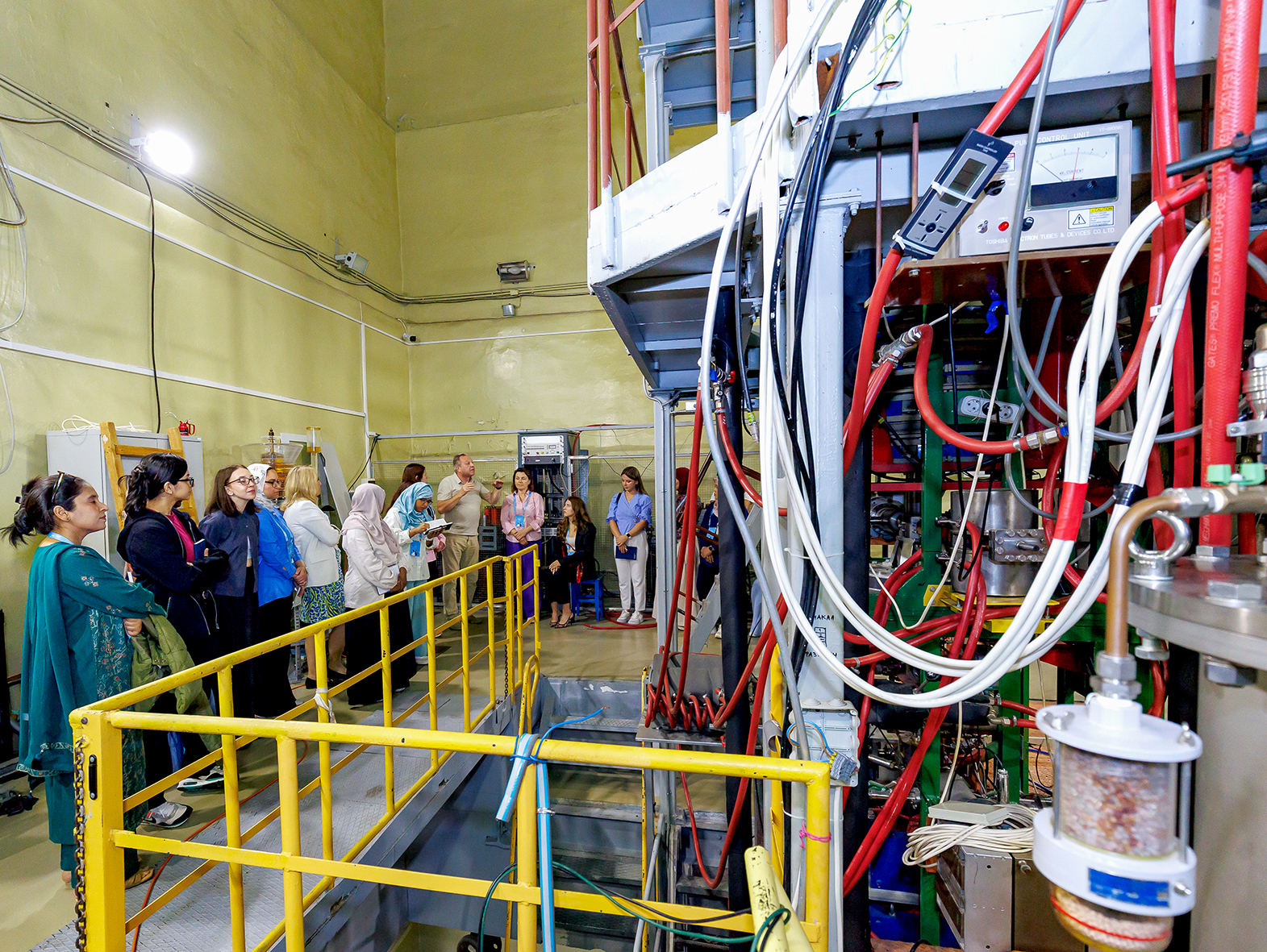
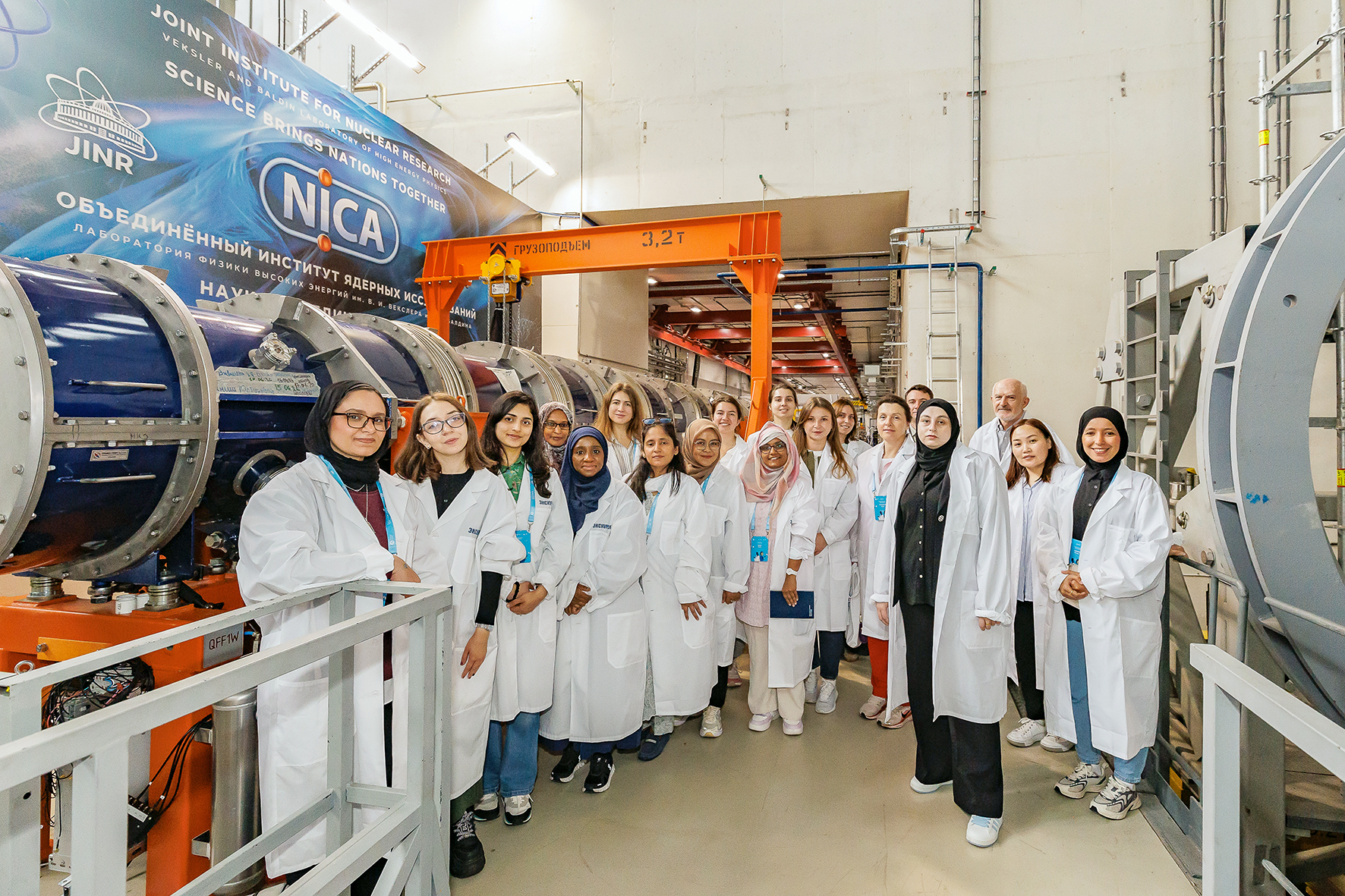
The following days, the delegation visited IREN, IBR-2 and NICA facilities. The participants were very happy to visit real objects, were involved in the story of the processes and asked many questions to researchers.
Technical Lead Katya Slavcheva emphasized that JINR makes a significant contribution to the Programme, "The scientists and researchers of the Institute generously shared knowledge and experience. The main events included visits to JINR facilities, as well as lectures in lecture halls. This is critical to the success of this group's programme. The participants also benefited from establishing contacts and dialogues with JINR Directorate, scientists and researchers. In addition, we had a free Sunday in Dubna with a beautiful sunny weather, we enjoyed walks around the city and along the Volga River. Dubna and JINR will forever be in our hearts thanks to the exceptional hospitality and professionalism shown towards us."
Head of the LMP Maria Naydenova also told what the visit to the Institute was remembered for, "JINR has an impressive history, infrastructure and a large number of international scientists and researchers. The visit of the participants of the Programme to the unique pulsed reactor IBR-2 aroused great interest, they asked many questions. In the Sector of Interdisciplinary Research of Cultural Heritage Sites, we learned about the use of nuclear technologies other than electricity generation. A visit to the NICA Collider significantly expanded the understanding of JINR research facilities."
Director for International Cooperation at the Rosatom Technical Academy Viktor Mazepov emphasized, "Visiting JINR has become an important part of the visit Programme. The participants were able not only to learn about the advanced infrastructure of the Institute, but also to see how fundamental nuclear physics research is used in a variety of fields - from materials science and ecology to the investigation of cultural heritage sites. It is especially valuable that the Programme united lectures of leading specialists with practical exercises and introduction of unique facilities. It is this format that allows you to get a holistic idea of the possibilities of today’s nuclear science and contributes to the professional exchange between specialists from different countries."
A special part of the Programme was the work on joint scientific projects. The tasks were developed by the Rosatom Technical Academy and became the starting point of all events. Every day, the participants gathered for technical sessions to meet the tasks. The participant and curator of the project, the leading engineer for personnel training at the Safety Culture and Human Reliability Competence Centre of the St. Petersburg Branch of the Rosatom Technical Academy Natalya Naumchenko spoke about it in more detail,
"I was asked to come up with project assignments for the Programme that can be worked on for two weeks in teams. It was important that during the work, the girls use the knowledge gained on lectures, excursions and technical tours and could ask questions to the speakers in real time, clarify the details and adjust their decisions.
So, three fictional countries were born - Radium, Polonius and Francius. Their names are symbolic: all three elements were discovered by female scientists. Radium is located in Africa, Polonius - beyond the Arctic Circle, Francius - in Europe. On the first day, I presented cases and the participants united into three subgroups, depending on what challenges they would like to face.
The introductory ones were different: resources, budget, the occurrence or lack of nuclear technologies, a research reactor, problems with energy supply. In two weeks, the teams had to develop a full-fledged programme for the development of the nuclear industry for their fictional country."
The curator also shared her opinion on the Programme as a whole, "This is a wonderful opportunity for women to discuss the challenges they face on their career path. We heard stories from the representatives of the Russian nuclear industry and the IAEA about how they had built their careers. It's really inspiring and empowering to move on.”
The time spent in JINR and Dubna left a great impression. Natalia stated, "The reports submitted by the Joint Institute for Nuclear Research were at a very high scientific level. An advantage was that the speakers spoke in good English that made the lectures not only useful, but also really exciting. We had a lot of questions, I wanted to know more.
I really enjoyed it in Dubna. I have visited many nuclear cities and Dubna is definitely one of the best. There is an amazing balance of city and nature, many beautiful buildings, there is everything for a comfortable life: places for walking, hotels and infrastructure. Everything is close, very cozy. Beautiful big embankment that is nice to walk. My colleagues and I highly appreciated the atmosphere of the city. And one more advantage is proximity to Moscow. All together - fantastic combination!"
The presentation, as well as defense of project papers was in Moscow on 14 August in the Rosatom pavilion at VDNKh. The official closing was attended by JINR Vice-Director Vladimir Kekelidze. He congratulated all participants and colleagues, highlighting the joint contribution of the Technical Academy and JINR to support the mission of the Programme to strengthen the role of women in nuclear science and technology and to promote international cooperation in the peaceful use of nuclear energy. All the participants were awarded certificates of completion of the Programme.
The participants shared their experience and impressions.
Viktoria Yanovich (Group Leader in the Department of Reliability and Safety Analysis at the Belarusian NPP):
"I have been working at the nuclear power plant for eight years, starting with compulsory practice after university. Currently, I am engaged in security analysis and security culture. An invitation to participate in the IAEA Programme came to work. For many NPP employees, it is impossible to go on a business trip, since the operation of the main equipment depends on them. They offered me because I have suitable work experience and good knowledge of English. In addition, the Programme has a lot of areas - for a full immersion, you need to know not only the structure of the nuclear power plant, but also about neutron sources, safety culture and leadership.
The IAEA has two programmes for women. One of them named after Marie Curie is for young students that have not yet worked but have only graduated or are in the process of studying. And here is a programme named after Lisa Meitner, for women whose work experience is no more than 10 years. Participation is a good opportunity for professional increase - the programme absolutely helps to develop skills. Firstly, we build contacts - we can find out and discuss how things are in other countries in a similar field of activity. Secondly, we have the opportunity to visit different institutions and organizations. The organizers plan to talk with those who have been through the programme before to get feedback and to find out how it helped their careers. I already have many thoughts and plans that can be changed at work and in life.
Working in an intercultural team is difficult and interesting. We all have different knowledge and experience. We speak English each with their own accent. But nevertheless, we manage to hear each other and agree on our joint project.
During the Programme, I was impressed by the lecture about low-power nuclear power plants RITM-200 from the Experimental Design Bureau of Mechanical Engineering named after I.I. Afrikantov. New facilities currently under construction in Uzbekistan will be very popular in the future. It was interesting to meet the people that had designed them. This is a unique opportunity.
Dubna is a wonderful city for life and development, we were greeted atmospheric and with soul. We were shocked by the NICA Accelerator Complex - a grandiose and major project, thanks to which many interesting discoveries will be carried out."
Fariha Anjum (Rooppur NPP, Bangladesh):
"I work at the Rooppur Nuclear Power Plant operated by Nuclear Power Plant Company Bangladesh Limited (NPCBL) under the Ministry of Science and Technology, Government of Bangladesh. I have been working in the nuclear field for almost 7.5 years and I am currently Head of the Nuclear Safety Monitoring and Control Laboratory at the Department of Nuclear Safety and Reliability.
My responsibilities include nuclear safety estimation and verification; evaluation of readiness of systems and equipment for commissioning and work with nuclear hazardous substances; supervision and safety check throughout the entire life cycle of nuclear fuel at the plant, including fuel acceptance, incoming inspection, storage and loading into the reactor core; analysis of test results during commissioning; evaluation of compliance with nuclear safety requirements and safe operational limits; investigation of incidents and deviations; as well as developing and evaluating a nuclear safety culture.
The LMP Programme provided me with a great opportunity to explore aspects of the life cycle of nuclear technology, including fuel plant, nuclear plant operation, advanced reactor technology, nuclear research and waste management. I especially enjoyed visiting the Kalinin NPP, sessions on technologies for small modular reactors and floating nuclear power plants, as well as discussions with experts from the IAEA, Rosatom and other organizations. Most of all, I remember the opportunity to exchange practical experience with professionals in the field of nuclear energy from different countries and get an idea of how technical knowledge, leadership and communication are united in the nuclear field.
JINR and Dubna were one of the most inspiring parts of the Programme, thanks to a combination of advanced scientific research, international cooperation and the practical use of nuclear science. I was especially interested in sessions on neutron sources, Neutron Activation Analysis, environmental research and the use of Neutron Activation Analysis in cultural heritage, as well as a tour of JINR and a visit to the NICA Collider. I also loved the city of Dubna - calm and green, where research and international scientific collaboration are integral to the environment.
The group project we worked on as part of the LMP was dedicated to developing a comprehensive nuclear technology development programme for the Arctic country of Polonius. The main task was to ensure the technical and economic feasibility of the proposed solutions, taking into account the harsh climate of the country, infrastructure restrictions, environmental requirements and public approval. Lectures, visits, expert guidance and diverse perspectives from team members helped to better represent the implementation of our proposed solutions for Polonia. Through teamwork and structured analysis, we were able to develop and present a realistic and comprehensive strategy."
Sana Hammam Bilal (Federal Authority for Nuclear Regulation, United Arab Emirates):
"At work, my responsibilities include supervision of radiation protection at nuclear facilities, as well as licensing and supervision of radioactive waste management facilities.
JINR has made a very positive impression on me, it is an excellent international scientific centre. A visit to the Frank Laboratory of Neutron Physics and learning about the level and complexity of the equipment showed science in action and this experience was especially inspiring. What struck me most was the enthusiasm and passion of the people that welcomed us and shared their knowledge so generously. Their work is a real contribution to the future. I left Dubna with a deeper understanding of how basic research is carried out in practice and a real sense of the importance of international scientific cooperation."
Risha Diya Ramadani (Telkom University, Indonesia):
"My activities focus on teaching and learning about nuclear power, energy transition and low carbon energy systems. I've been lecturing for five years.
The Lisa Meitner Programme of IAEA has broadened my horizons in the field of nuclear energy - from the fuel cycle and safety to SMRs, R&D and international cooperation.
It was interesting to see how different countries face different problems but at the same time share the same goal - the responsible development of nuclear energy.
I was impressed by the strong research culture of JINR - there are advanced facilities and a truly international scientific environment here.
Dubna has a very comfortable atmosphere, clean and quiet. What I liked most was that science is not isolated from everyday life but is a part of the city's identity."
Areej Ahmed (Centre for Nuclear Safety and Radiation Control, Egyptian Atomic Energy Authority, Egypt):
"I have been cooperating with the Centre for 11 years. My responsibilities include investigations of nanomaterials for radioactive waste treatment, participating in emergency preparedness at nuclear facilities and participating in the regulatory review of nuclear safety documents (such as PSAR and SER) for various nuclear facilities in Egypt. I also carry out inspections at research reactors and pilot fuel production facilities, specialize in the analysis of severe accidents and participate in the development of national safety regulations.
The Lisa Meitner Programme of IAEA is an excellent initiative that empowers women in nuclear science. It offers a unique platform for professional development, allowing participants to deepen their technical knowledge and promoting intercultural cooperation with nuclear specialists from around the world. I liked that there was an emphasis on developing leadership skills, strengthening global communication, developing networking necessary to improve nuclear safety and radiological protection on an international level.
JINR is a world-class international research centre with unique capabilities, advanced achievements in nuclear physics and it intersects with my work in the field of nanomaterials and radiation chemistry. I admire its active international collaboration that brings scientists together to meet complex problems. Dubna's legacy of peaceful scientific cooperation is also deeply in tune with my professional values."
Fatima Abbas (Pakistan Atomic Energy Commission, Pakistan):
"I have over 10 years of experience in deterministic safety analysis of nuclear power plants.
The multicultural environment and engagement with women in leadership positions has made the Lisa Meitner Programme particularly inspiring and enriching. Visits to nuclear power plants, fuel plants and physical laboratories have provided valuable insights into advanced nuclear technologies and complex systems. Cultural exchange, as well as trips to Moscow and Dubna were especially remembered. I was pleasantly surprised by the level of scientific research at JINR, especially, in the field of neutron physics. Dubna is a beautiful small town on the banks of the Volga, here, I met an object with a wonderful inscription: "Do Science in Dubna". Dining on a motor ship with beautiful views made the trip especially memorable."
Sonia Panizo Prieto (CIEMAT, Spain):
"I have been working at CIEMAT (Centre for Energy, Environmental and Technological Research) for 6 years. I started by writing a master's thesis, later, continued to work on my doctoral thesis and today, I work as a researcher in the field of reactor design and fuel cycle calculations.
If I had to describe the IAEA Programme in a word, then it is "inspiring". It gave me a boost and real motivation to move forward in nuclear power. Sometimes, I find it hard to imagine my future in nuclear physics. It's a male-dominated field and when you think about leading your own projects someday, pitching your ideas, shaping the situation... that seems unlikely. But being here, surrounded by women, I realized that it is not only possible but personally I can achieve it.
I really liked at JINR to observe various ways of using the capabilities of IBR-2: from art to physics. But most of all I will remember the people that surrounded me throughout. My group, teachers, organizers - they made these two very eventful weeks incredibly motivating. It wasn't just classes and excursions but a real experience where everyone really cared about our future. A comfortable and exciting atmosphere was created. I am going back home with so much more than just knowledge."
Thanks to FLNP Scientific Secretary Alexander Nezvanov for the help in preparing the article.
Mariya KARPOVA
Photos by Olesya CHEPURCHENKO
Translation by Elena VOSKANYAN
Based on materials from the JINR Weekly