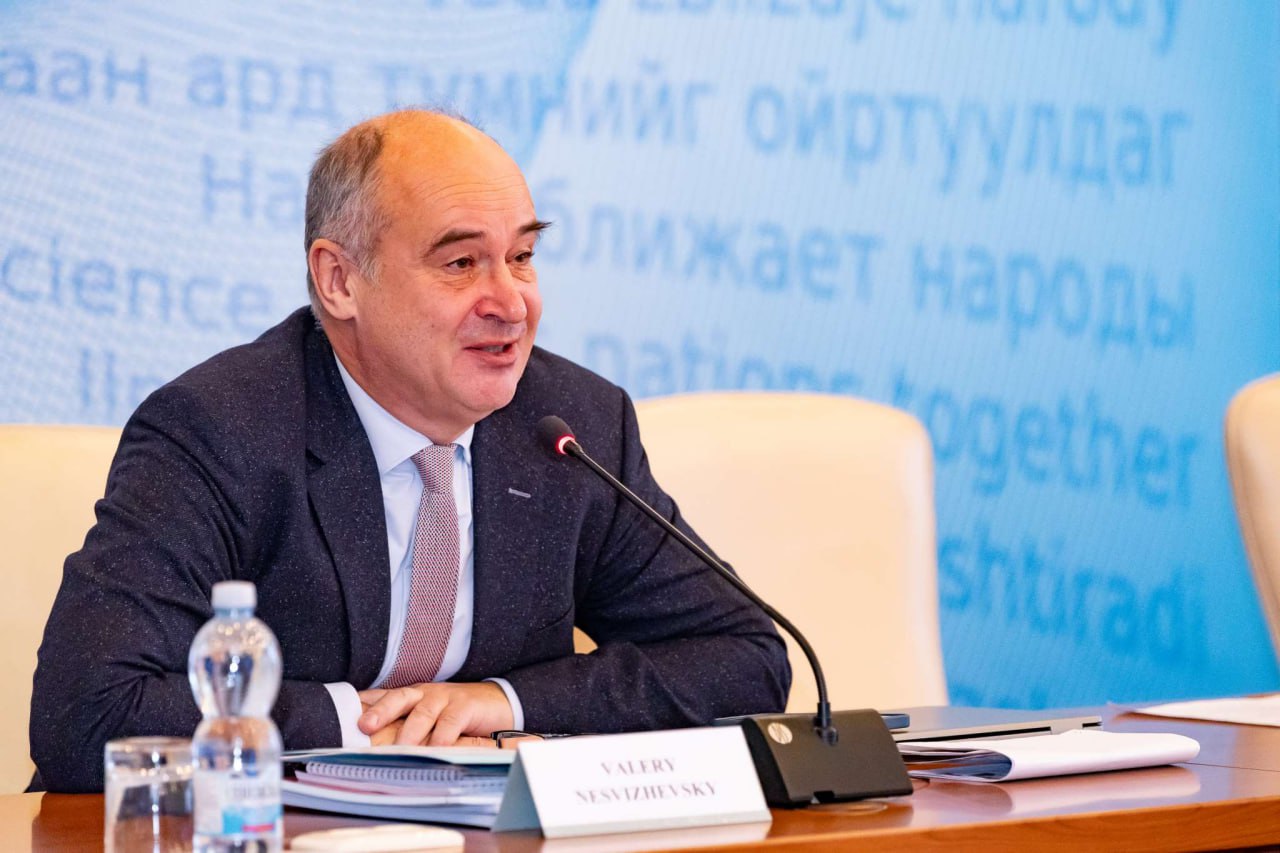
Chairman of the PAC for Nuclear Physics Valery Nesvizhevsky reported on the implementation of the recommendations of the previous meeting. Mikhail Itkis, Advisor to the Director of the Joint Institute for Nuclear Research, informed the members of the PAC about the Resolution of the 138th session of the Scientific Council (September 2025) and the decisions of the Committee of Plenipotentiaries of the Governments of the JINR Member States (December 2025).
Heads of the FLNR sectors reported on the current status of experiments at the Superheavy Element Factory and the GASSOL setup. The representatives of the DLNP presented a proposal for opening a new project “Technological positron annihilation spectroscopy complex PASTech”, and delivered reports on the current status of the DANSS experiment on detecting reactor antineutrinos and the experimental studies on the search for double beta-decay. Alexey Bogachev, Head of Sector No. 5 of the FLNR, presented a scientific report entitled “Multinucleon transfer reactions as a way to the island of stability”.
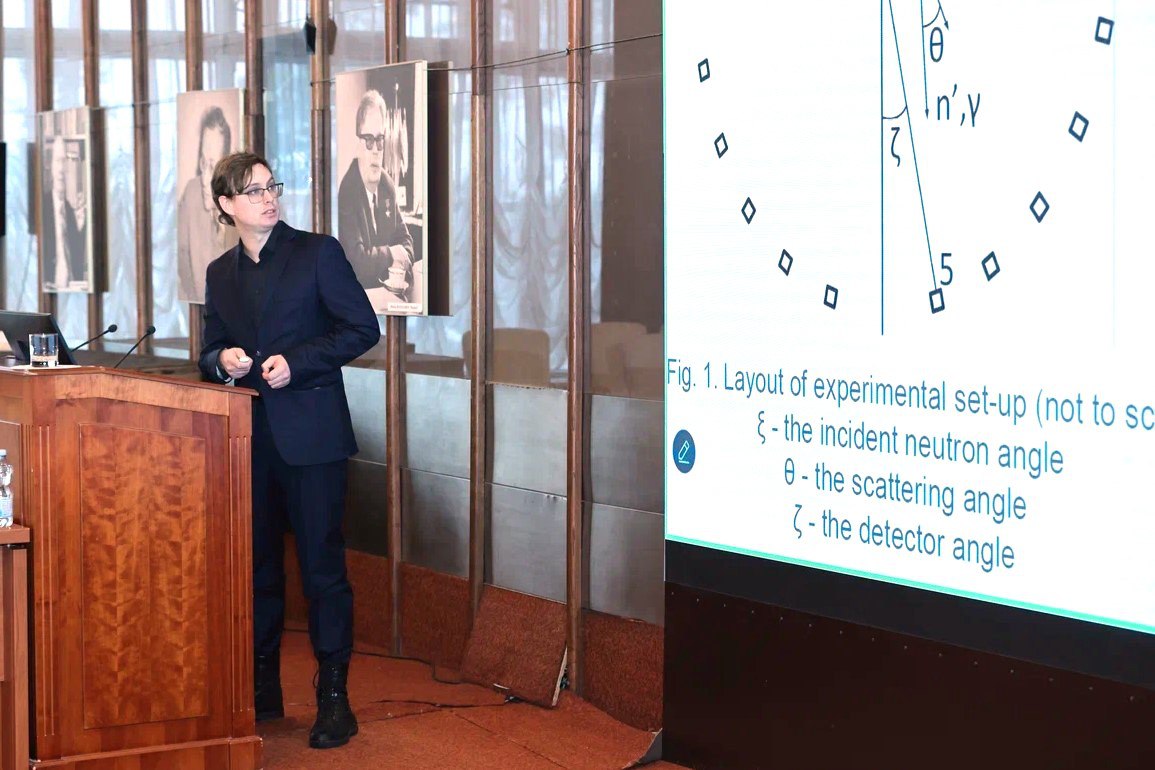
The report by Pavel Prusachenko, a senior researcher at DLNP, focused on the results of the measurement of differential and total scattering cross sections of 14.1-MeV neutrons on carbon nuclei. Using the tagged neutron method, data were obtained in the scattering angle range of 13-150°. The work identified the key characteristics of detectors for modeling and developed a new method for determining their efficiency. The results were published in international journals [1, 2] and added to databases, expanding the available data on nuclear reactions.
Pavel Prusachenko “One of the problems related to the potential use of carbon-containing materials in fusion reactors is the accumulation of helium, which is formed as a result of nuclear reactions under prolonged irradiation with high fluxes of fast neutrons, which leads to changes in the properties of the material. One of the potential sources of helium is the inelastic scattering of neutrons from carbon, followed by fragmentation into three alpha-particles. Estimates based on cross sections from various nuclear data libraries revealed significant differences, which raises doubts about the feasibility of using carbon-containing materials in future fusion reactors. The experimental results obtained in this study will allow us to obtain new cross-section estimates and solve this problem”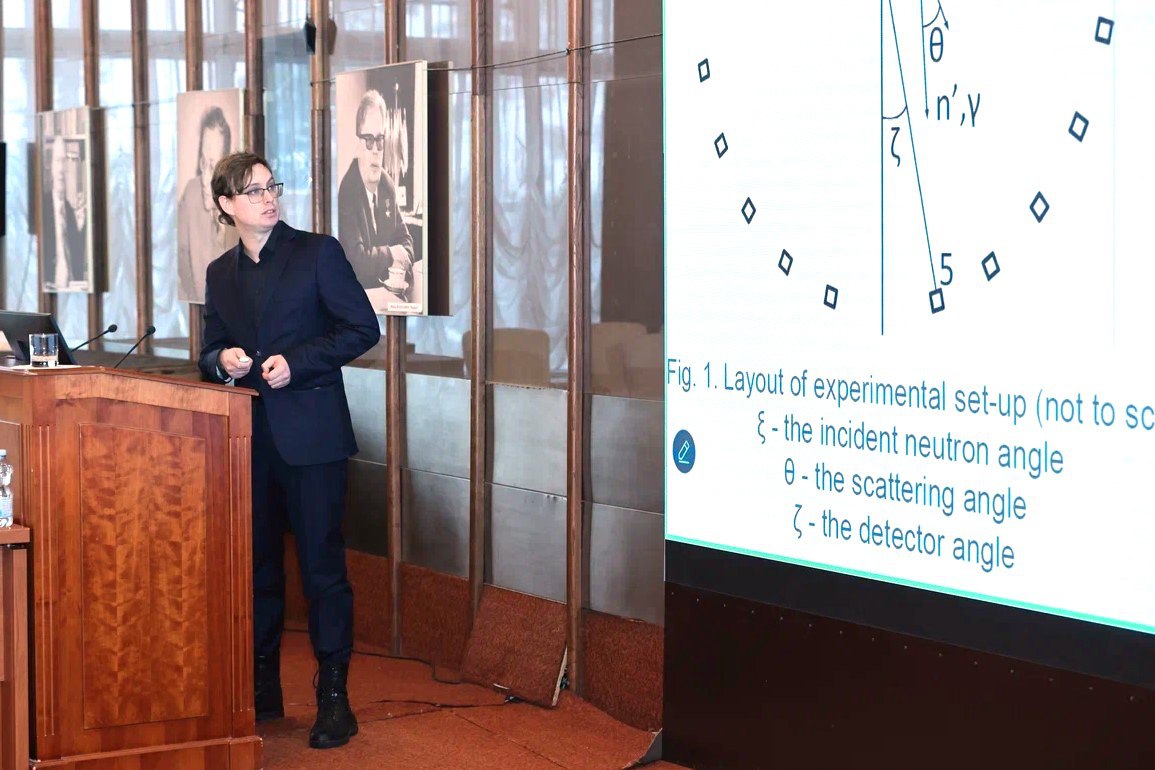
The first day of the 62nd meeting of the PAC for Nuclear Physics concluded with a poster session by young scientists from the Dzhelepov Laboratory of Nuclear Problems.
Today, following the meeting, members of the Programme Advisory Committee for Nuclear Physics will prepare the PAC recommendations and formulate proposals for the working agenda of the next meeting, which will be held in the summer of 2026.