FLNP seminar
12-18-2025 15:00 FLNP Conference Hall and remotely
"Iron borate single crystals: synthesis, effects and high-tech applications"
Mark B. Strugatsky
Head of the Department of Condensed Matter Physics
(Physics and Technology Institute, V.I. Vernadsky Crimean Federal University)
Iron borate single crystals, FeBO3, due to the properties of their crystal magnetic structure, are models for numerous investigations in solid-state physics and magnetism. The results of investigations of surface magnetism; magnetic birefringence of transverse sound – an acoustic analogue of the magneto-optical Cotton-Mouton effect; interaction with the magnetic subsystem of the crystal of longitudinal sound induced by femtosecond laser pulses; the yield of sublattice magnetizations from the basal plane under high pressure discovered using neutron diffraction and the special features of magnetic resonance will be presented.
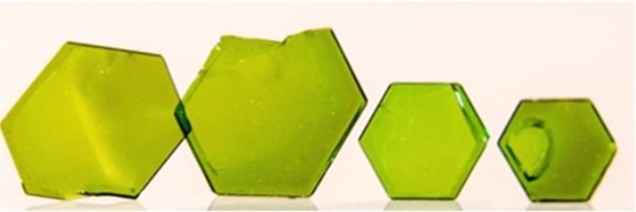
Other effects will also be discussed. In particular, an as-yet-unexplained abnormal decrease in magnetization with decreasing temperature has been discovered in iron borate-based crystals. We believe that this effect can be clearly interpretable using neutron physics techniques.
A rare combination of the properties of iron borate also allows studying it as an active element in current high-tech devices. There has been a marked tendency in this area in recent years. Our crystal is a transparent magnet. We have succeeded to show that under certain conditions, it possesses a very strong Faraday effect - a magneto-optical converter! It has recently been discovered that iron borate can be quite efficient in spintronic devices. Finally, promising results are currently evaluated for its use in advanced synchrotron complexes as an ideal monochromator of synchrotron radiation. Advances in the latter area will allow developing a new, powerful technique to study the structure, as well as the electronic and magnetic properties of matter – Synchrotron Mössbauer Spectroscopy.
The results of the synthesis of iron borate single crystals are expected to be presented briefly. At present, we develop two techniques for growing this crystal: solution-melt crystallization that allows for the production of thin single-crystal plates and gas transportation that allows synthesizing isometric (bulk) samples. The use of crystals of different shapes significantly expands the capabilities of discovering new effects in this material, increasing its scientific potential.