FLNP seminar
09-03-2026 12:00 Conference hall (bldg. 42, 3rd floor) and remotely
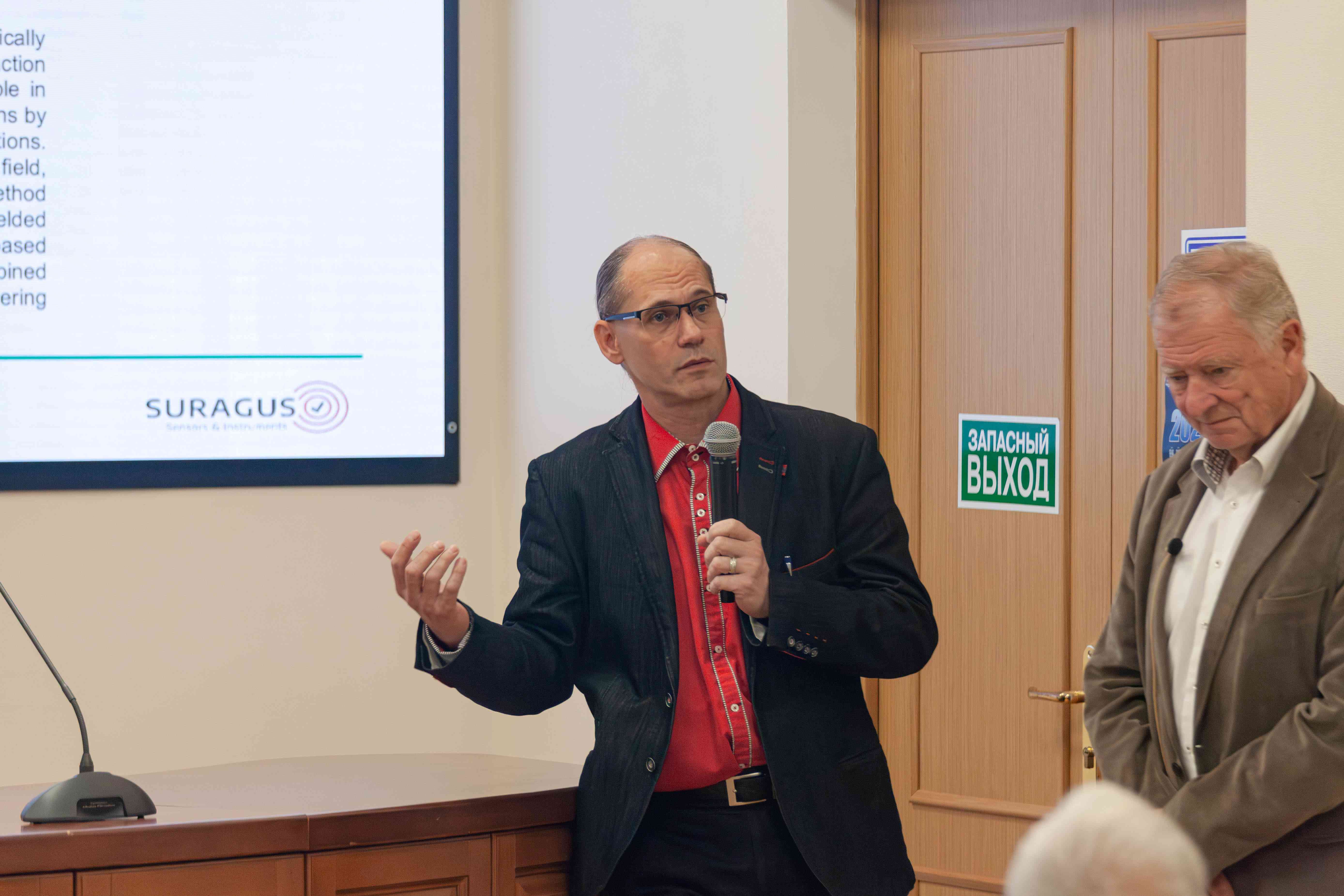
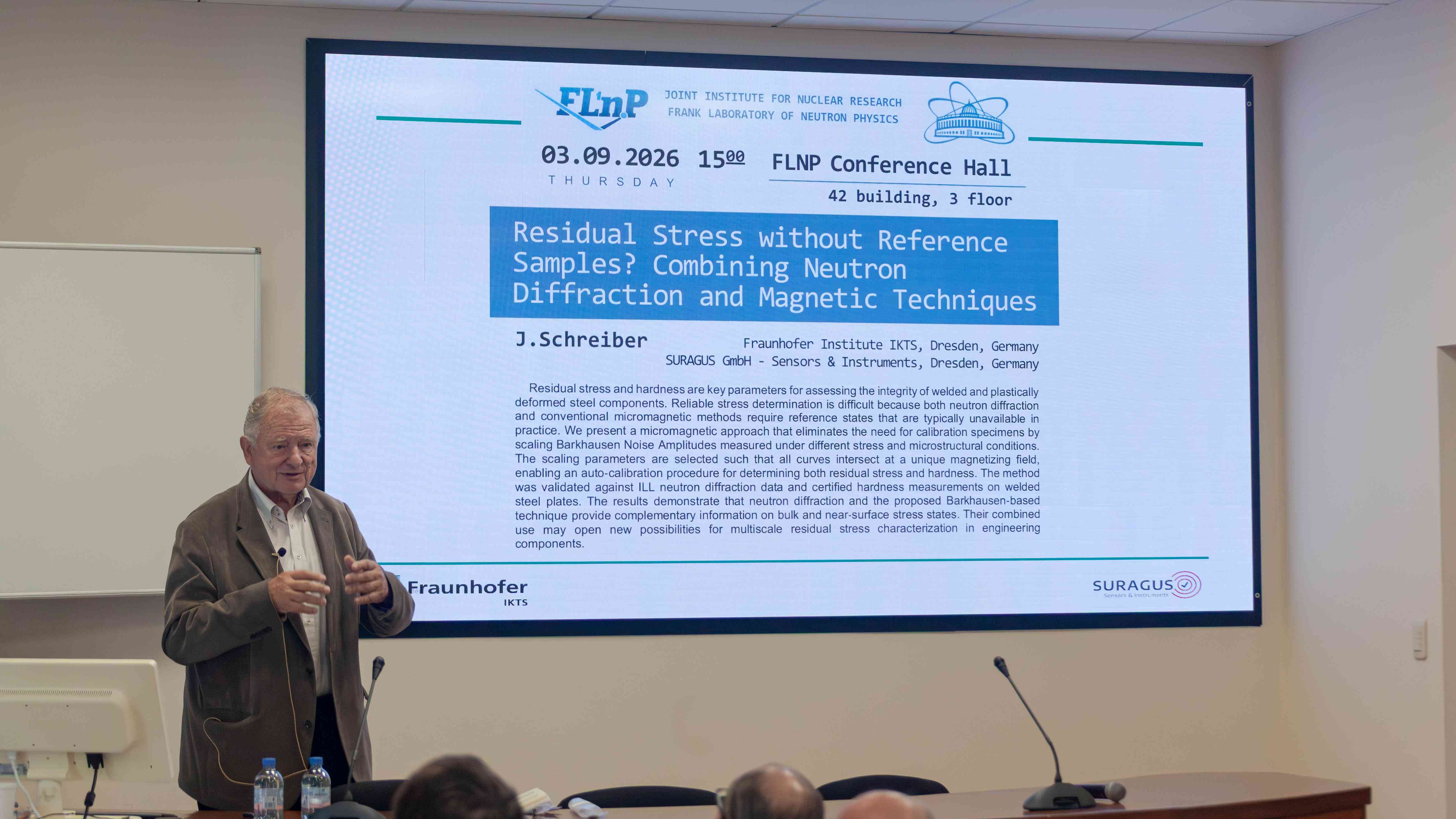
Speaker: Jurgen Schreiber (Fraunhofer Institute IKTS / SURAGUS GmbH - Sensors & Instruments, Dresden, Germany)
"Residual Stress without Reference Samples? Combining Neutron Diffraction and Magnetic Techniques"
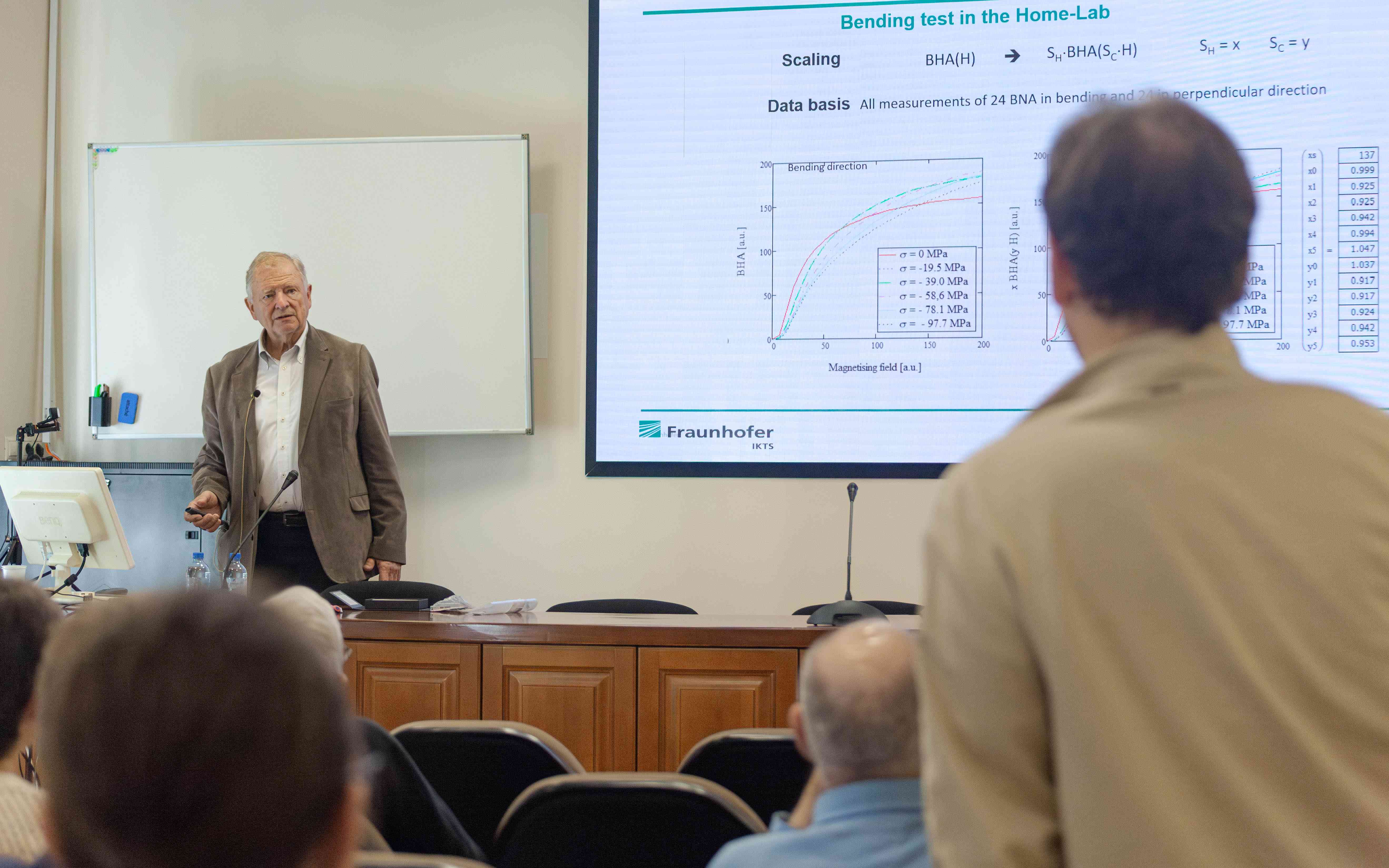
Residual stress and hardness are key parameters for assessing the integrity of welded and plastically deformed steel components. Reliable stress determination is difficult because both neutron diffraction and conventional micromagnetic methods require reference states that are typically unavailable in practice. We present a micromagnetic approach that eliminates the need for calibration specimens by scaling Barkhausen Noise Amplitudes measured under different stress and microstructural conditions. The scaling parameters are selected such that all curves intersect at a unique magnetizing field, enabling an auto‑calibration procedure for determining both residual stress and hardness. The method was validated against ILL neutron diffraction data and certified hardness measurements on welded steel plates. The results demonstrate that neutron diffraction and the proposed Barkhausen‑based technique provide complementary information on bulk and near‑surface stress states. Their combined use may open new possibilities for multiscale residual stress characterization in engineering components.
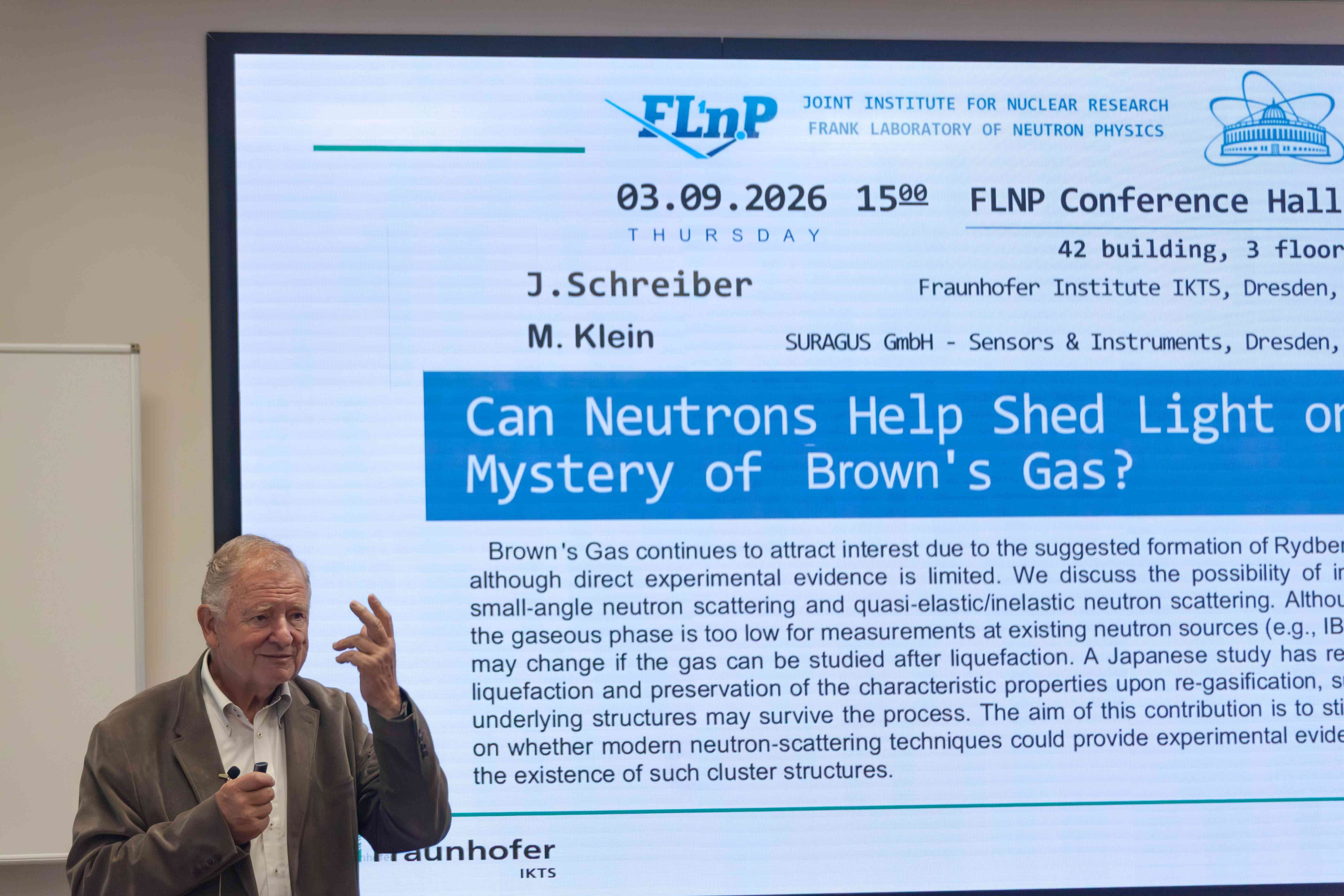
"Can Neutrons Help Shed Light on the Mystery of Braun's Gas?"
Braun's Gas continues to attract interest due to the suggested formation of Rydberg matter clusters, although direct experimental evidence is limited. We discuss the possibility of investigating it via small‑angle neutron scattering and quasi‑elastic/inelastic neutron scattering. Although the density of the gaseous phase is too low for measurements at existing neutron sources (e.g., IBR‑2), the situation may change if the gas can be studied after liquefaction. A Japanese study has reported successful liquefaction and preservation of the characteristic properties upon re‑gasification, suggesting that the underlying structures may survive the process. The aim of this contribution is to stimulate discussion on whether modern neutron‑scattering techniques could provide experimental evidence for or against the existence of such cluster structures.
Language - English